Talk Appin


Archaeological Investigation - Updates

Wendy Thorp of Cultural Resources Management (CRM) led the archaeological investigation to the interior of the Appin Inn building from 4-12 October 2016. It was a rewarding investigation assisted by an enthusiastic group of local volunteers from the Appin and Campbelltown communities. We would specifically like to thank the Appin Historical Society and their members as well as the community for the numerous hours they volunteered.

A progress report summarising the investigation to date has been prepared and is available via the link below. This statement has been submitted to the Heritage Council.

View Progress Report

As work progresses, we will continue to post updates of the archaeological investigation to this website. As such, we urge you to drop in from time-to-time to keep an eye on our progress.

If there is any information that you would like to share about the Appin Inn, we encourage you to contact us via our feedback page below.

Foundations of the western wall in room 1, CRM 2016 Foundations of the western wall in room 1, CRM 2016
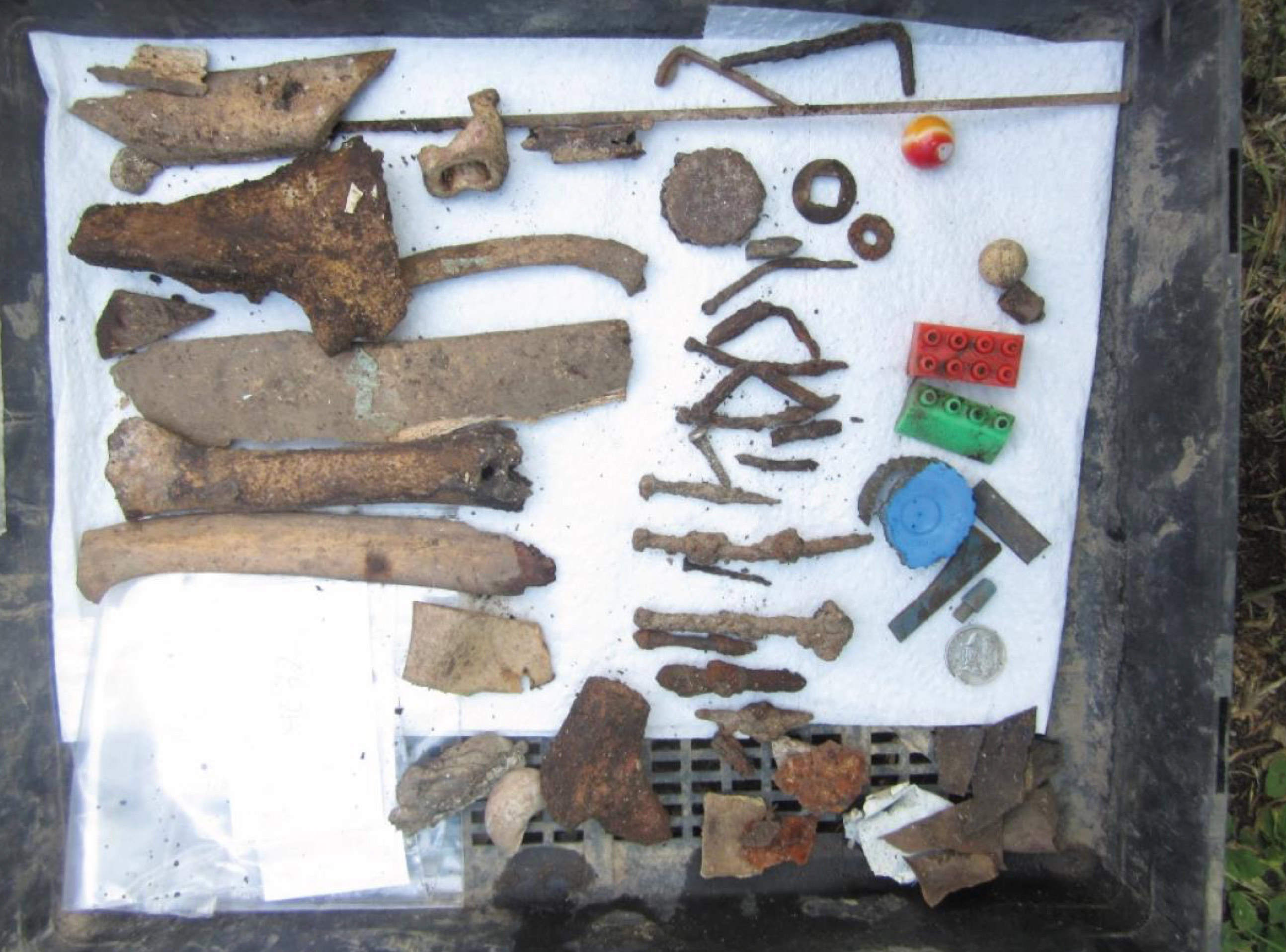
Typical assemblage of items found in the main building, CRM 2016 Typical assemblage of items found in the main building, CRM 2016
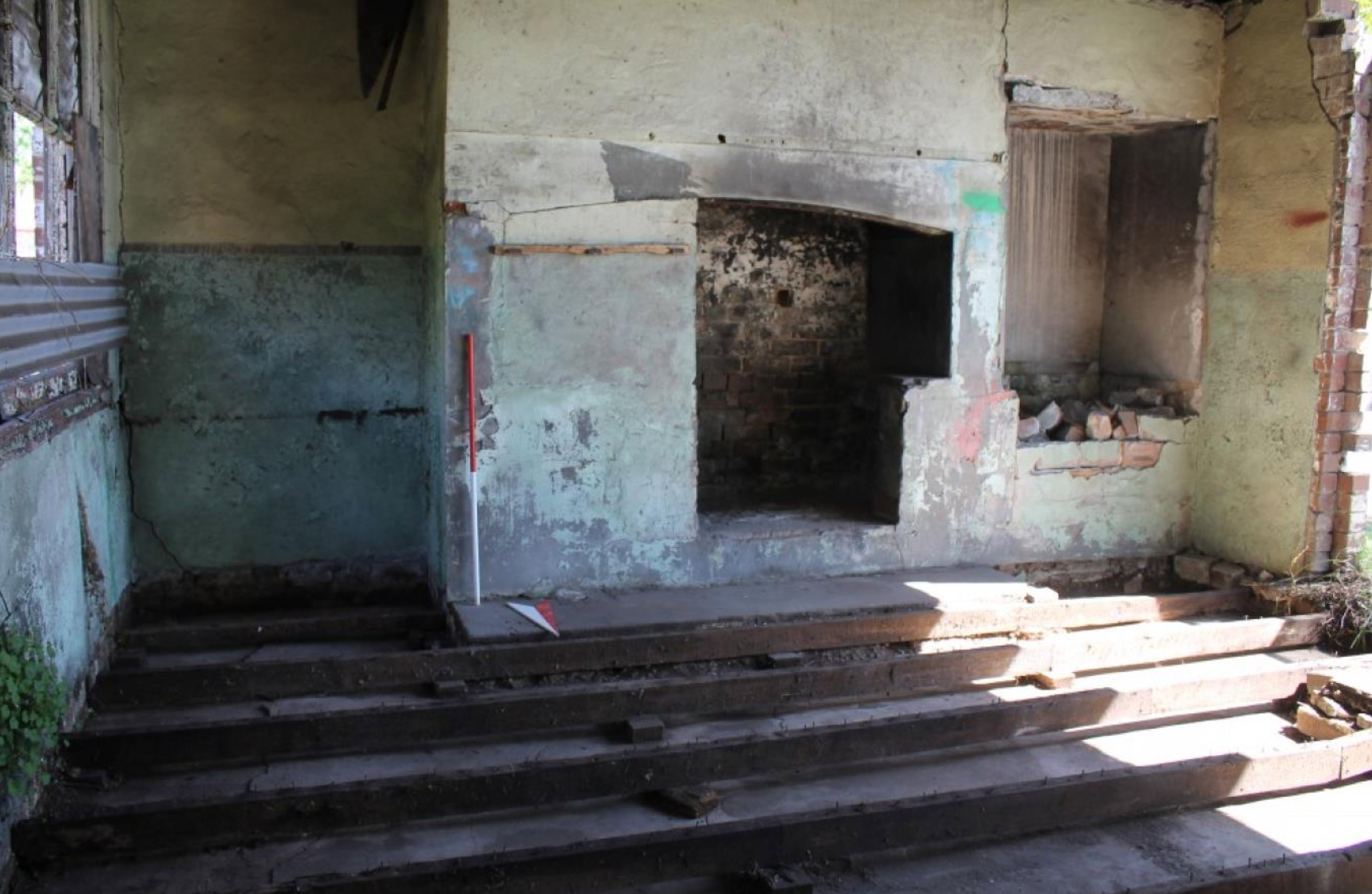
The new kitchen with the original cement floor below the later timber floor (Source CRM 2016) The new kitchen with the original cement floor below the later timber floor (Source CRM 2016)
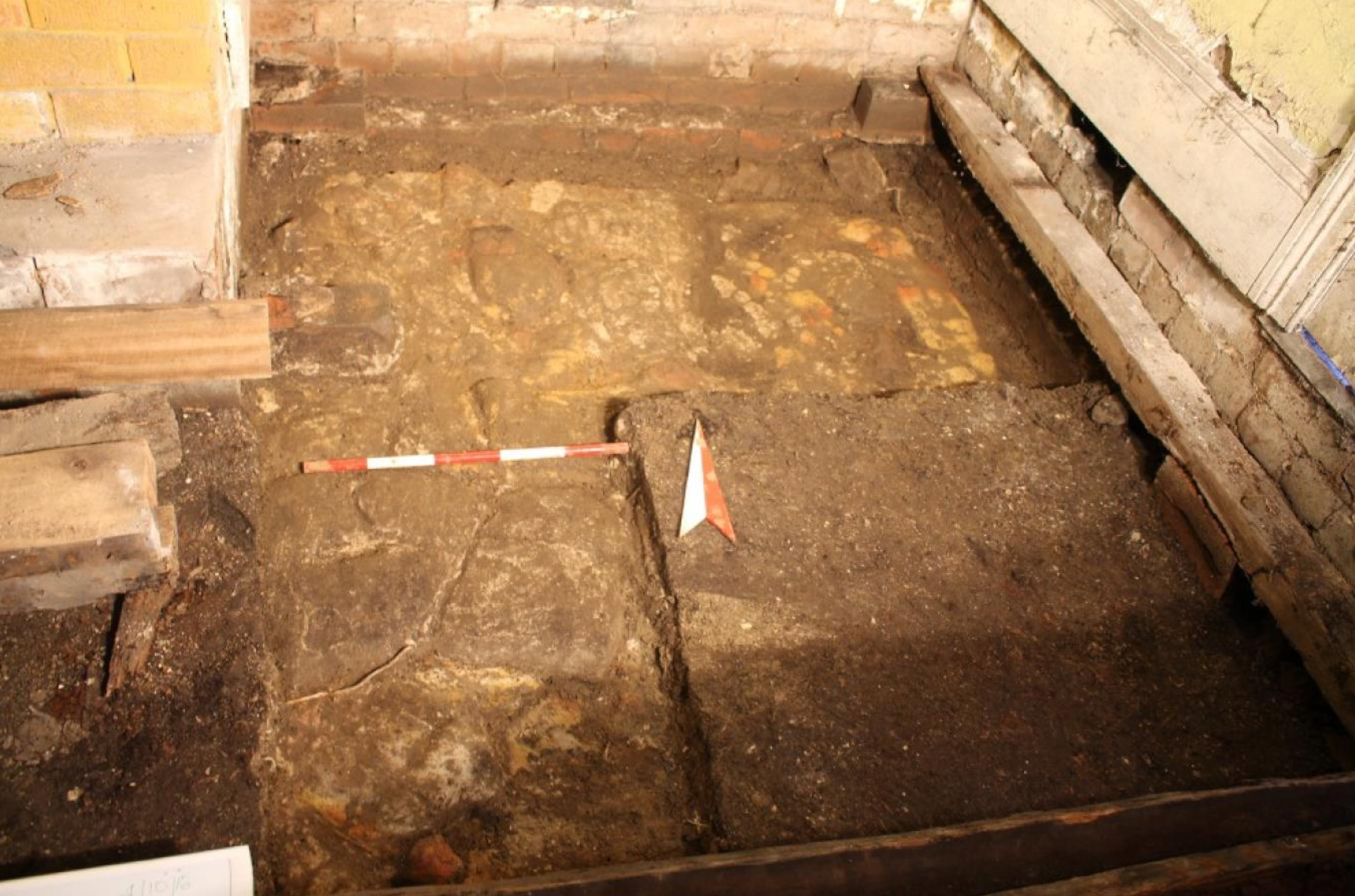
Paving found in room 3, CRM 2016 Paving found in room 3, CRM 2016

Unexpected Find

Walker Corporation has completed the construction of the Appin Place, a 26 lot community title residential subdivision, on the property behind the Appin Inn. During construction, a series of sandstone blocks were found. Work stopped in this area immediately and the Heritage Council was notified of the find.

In order to determine the nature of this unexpected find a permit was granted by the Heritage Council in accordance with s139(4) of the Heritage Act 1977 to allow test excavation to determine the nature and extent of the unexpected find. The permit can be downloaded here.

On the 25 October and 5 November 2016 Wendy Thorp of CRM undertook test excavations on the unexpected find. Progress reports and a statement of significance on the unexpected find have been submitted to the Heritage Council.

View Progress Report
View Statement of Significance

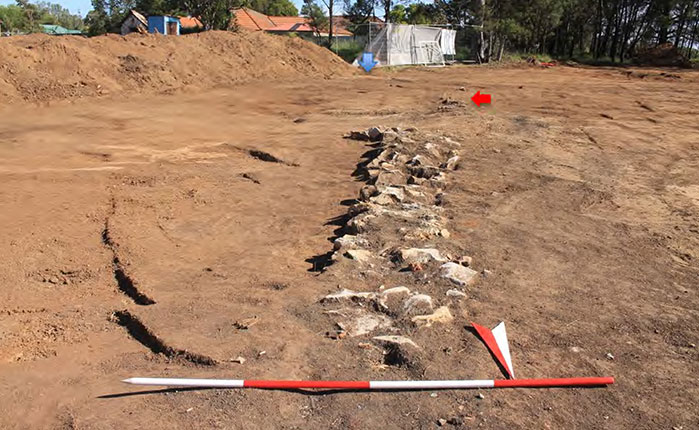
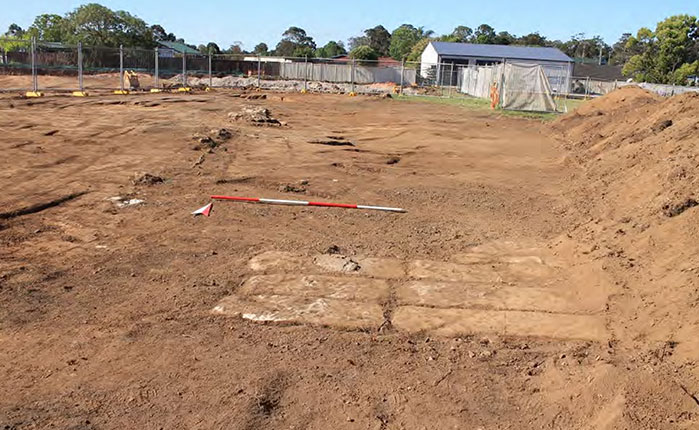
The unexpected find was identified as the likely foundations of the original Appin Inn stables or barn, with an estimated construction in the 1820’s. Based upon the test excavations, the stables were likely demolished in the early 1900’s and the stone from the stables was used in the construction of the sandstone extension of the Appin Inn.

Sandstone floor in relation to the wall foundations Sandstone floor in relation to the wall foundations; the darker area on the left is where flagging has been removed in the past (CRM, 2016)
View along the intact foundation View along the intact foundation; the red arrow marks the position of the fragmentary wall foundation and the blue arrow the remnant sandstone paving; scale 2 metres (CRM 2016)

The foundations were found to be in poor condition and sections were missing, most likely destroyed in the early 1900’s or 1950’s when the Appin Inn site was subdivided into the current property.

The foundations are located within the Appin Place property and they had serious impacts upon the approved road design within this development. Due to the foundations poor condition and their impacts, Walker Corporation applied for a new excavation permit from the Heritage Council to allow us to remove the unexpected find and undertake further testing within the grounds of the Appin Inn. The Heritage Council approved this permit and a copy is available here.

The foundations were removed on 6 December 2016. The stone from the foundations has been kept for use as part of the landscaping works within the grounds of the Appin Inn.

To ensure the history of the Appin Inn Stables is not lost, Walker Corporation is committed to:

  • Undertaking an interpretation plan to ensure the stables’ history is acknowledged into the future.
  • Undertake an Archaeological Management Plan to manage impacts of the proposed car park and landscaping upon potential

Appin Inn Archaeological Investigation

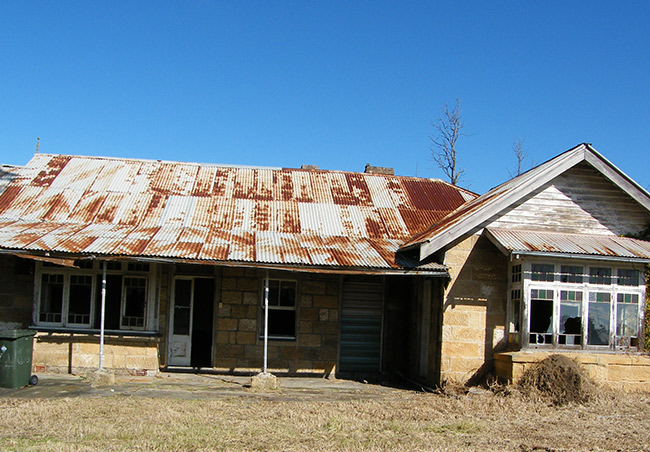
Walker Corporation is undertaking the restoration of the Inn at 61 Appin Road, Appin. We have development and construction approval to undertake the restoration. Restoration works are well underway. Like most restoration projects, the Appin Inn restoration will involve collaboration between numerous skilled experts such as engineers, builders, archaeologists, masonry experts, bricklayers and carpenters.

The Inn is identified as a locally significant heritage item within the Wollondilly Local Environmental Plan 2011 (in Schedule 5). Due to the local heritage significance of the site, an archaeological investigation is required prior to undertaking the restoration.

The purpose of the archaeological investigation is to uncover and substantiate the history of the Inn. As such, we welcome residents to submit any documentation or correspondence that might shed new light on the building’s history here.

Status

In March 2016, we commenced preparation of an archaeological assessment and excavation permit application, in accordance with the requirements of the NSW Heritage Act 1977.

In July 2016, an excavation permit was approved by the NSW Heritage Council.

Supported by a team of experts, Wendy Thorp of CRM has been engaged as the project’s Excavation Director.

The archaeological investigation and documentation of subfloor deposits in the main building and exterior kitchen are complete.

The archaeological investigation of the rear grounds of the Inn are expected to be undertaken in 2019.

A history of the site

The Dharawal people were the traditional owners of the land, with several occupation sites surrounding the district.

The Inn has a long and complicated history. Since the original land grant to Thomas Davis in 1819, the site has been owned by 18 different people and there have been numerous liquor licenses issued for the operation of the Inn.

Since the establishment of an Inn on the site, today known as The Appin Inn, it has been known as:

  • Union Revived (1833-1844)
  • Blue Bell Hotel (1850)
  • Railway Hotel (1851-1873)
  • Appin Hotel (1874-1879)
  • The Imperial Hotel (1879-1910)
  • Carrolllon Guest House (1911-1950)
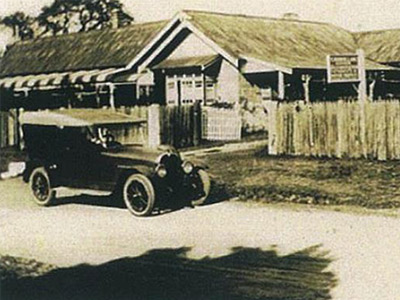
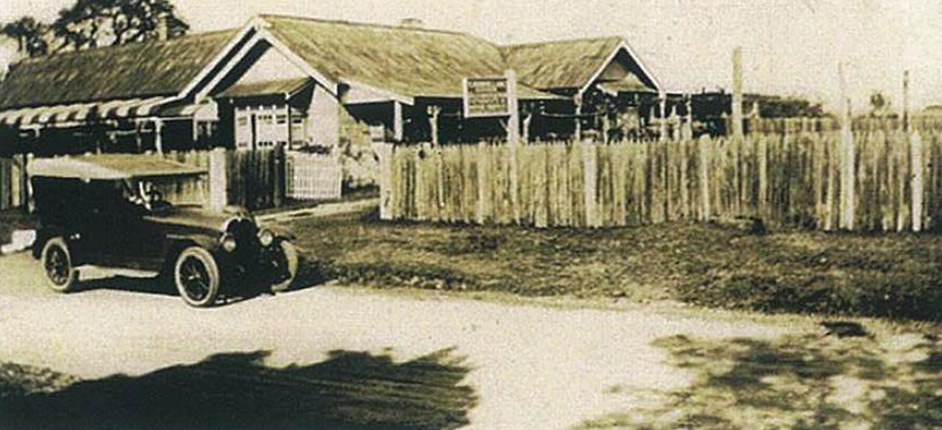
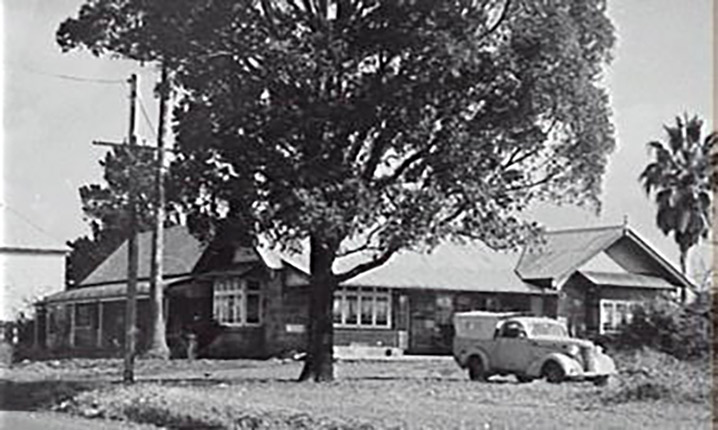
Photograph of Carrollon boarding house 5 February 1923 Photograph of Carrollon boarding house 5 February 1923
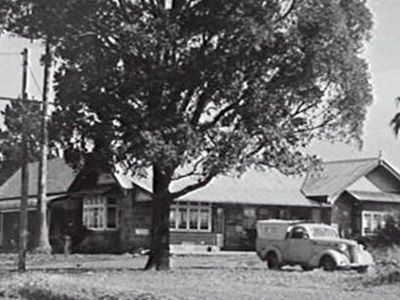
Carrollon Boarding House, C. 1950, Photographed by Ivor G. Thomas, C&AHS Carrollon Boarding House, C. 1950, Photographed by Ivor G. Thomas, C&AHS
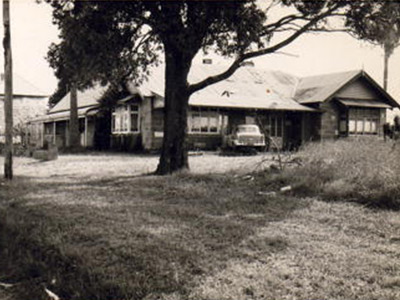
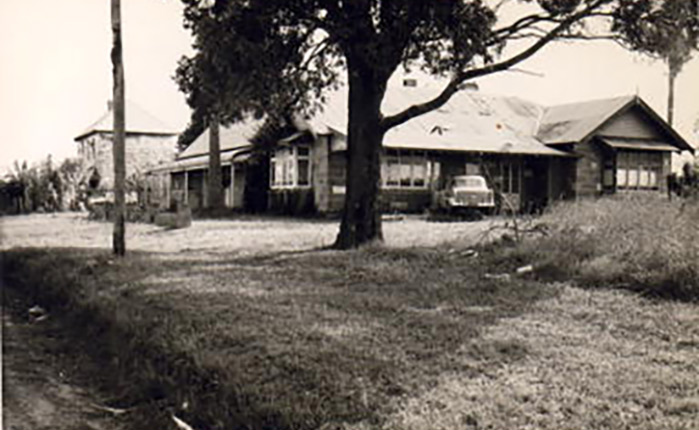
Carrollon boarding House, c. 1960, Photographed by Steven Roach, Campbelltown City Library Carrollon boarding House, c. 1960, Photographed by Steven Roach, Campbelltown City Library

The current documented history of the site provided by the NSW Office of Environment and Heritage (OEH) and Wollondilly Shire Council names the Inn the “Appin Inn” and notes:

“This inn was established in 1827 by William Sykes, who held the license until 1833 when Nicholas Carberry became the licensee. In 1843 William Rixon became the innkeeper. Its name later changed to the Union Revived Inn. In the 1940s it became a boarding house under the name "Carrollan" run by Mr and Mrs Landdon.”

Ref: www.environment.nsw.gov.au/heritageapp/

Whilst it is clear that an Inn operated from the property from the early 1830’s, the name William Sykes and its attachment to the Inn as a proprietor or licensee is being questioned.

During the detailed background research, a review of official title records, deeds, the Government Gazette, plan of subdivisions, town plans and maps was completed.

Interestingly, a review of the title deeds and liquor licenses does not show any association between the Inn on the western side of Appin Road (i.e. the site), William Sykes or any other member of the Sykes family. In other words, the record provided by the Council and the OEH could be incorrect. The earliest documented evidence of an Inn on the site was the Union Revived Inn when a liquor license was issued to Nicholas Carberry in 1833. Nicholas Carberry was the landowner of the site and Inn from 1824-1850.

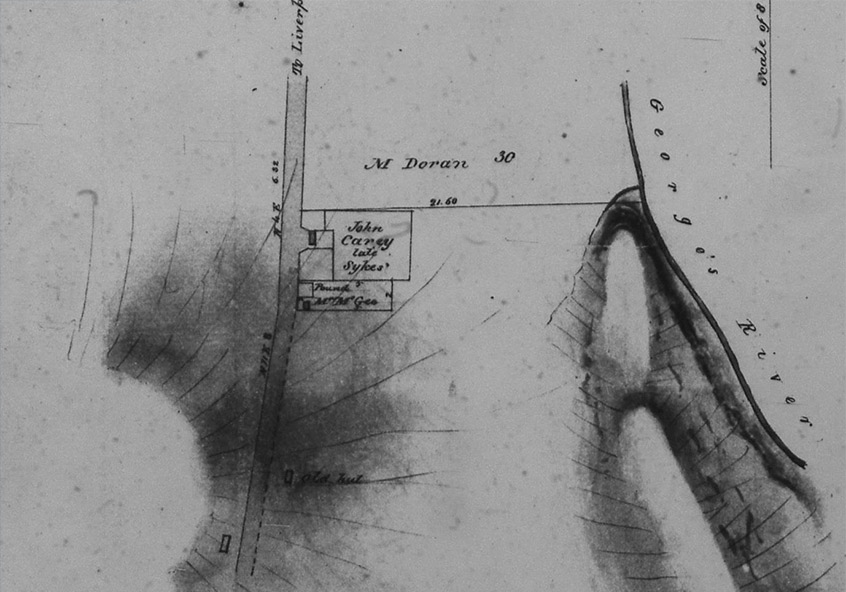
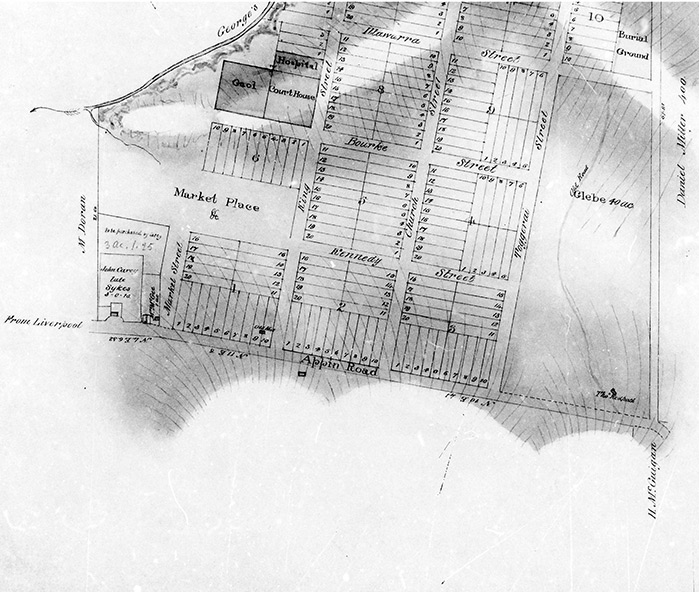
The 1832 and 1834 town plans – provided below, have the notation “John Carey late Sykes” in the location of the second Inn on the eastern side of Appin Road. This is at the corner of Wonson Oval opposite the Appin Hotel.
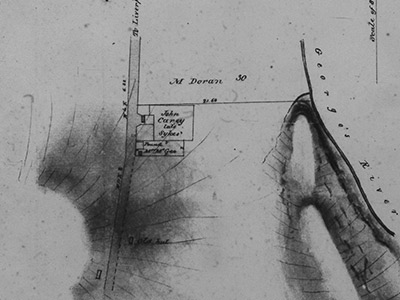
Town Plan 1832 Town Plan 1832
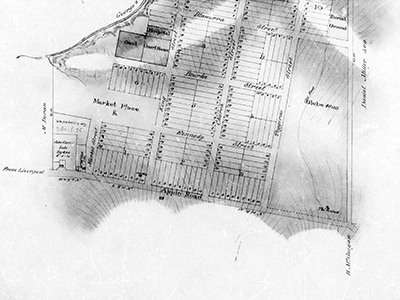
Town Plan April 1834 Town Plan April 1834

For more details of the history of the site, its buildings and the people associated with the site, we invite you to read the report by Kayandel Archaeological Services.

Click here to view the Kayandel Archaeological Services June 2016 report.

If you feel that there is more information that we should consider in relation to the history of the site, we encourage you to provide confidential feedback here, via our web submission form.
Archaeological methodology

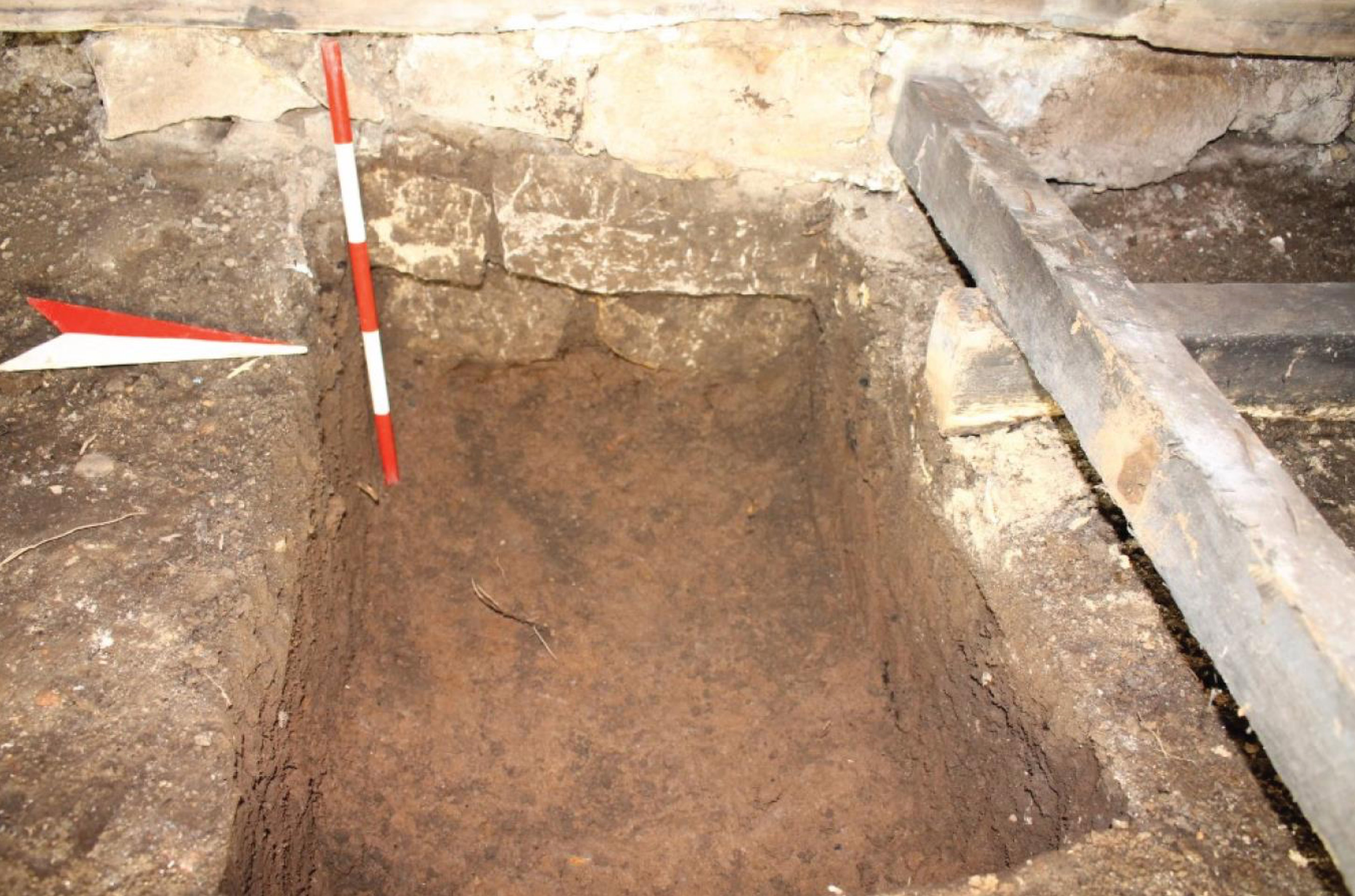
The archaeological investigation is being undertaken in several stages, including:

  • Investigation and documentation of the interior of the main building and kitchen
  • Complete an Archaeological Management Plan
  • Investigation of the rear grounds of the Appin Inn
  • Complete Interpretation plan

Contact details

  • Wendy Thorp - 0411 500 484
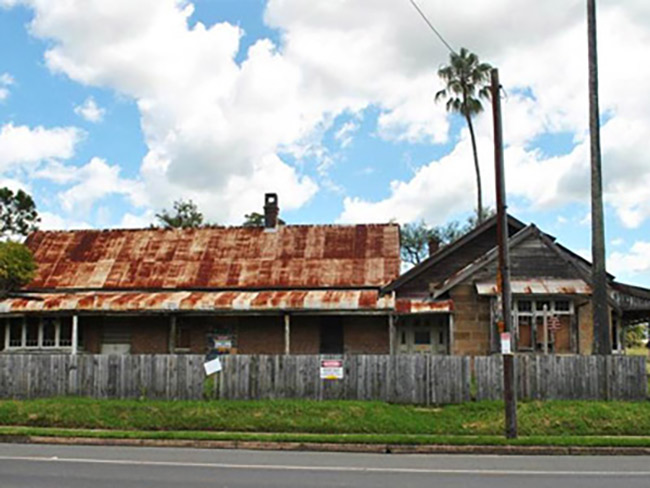
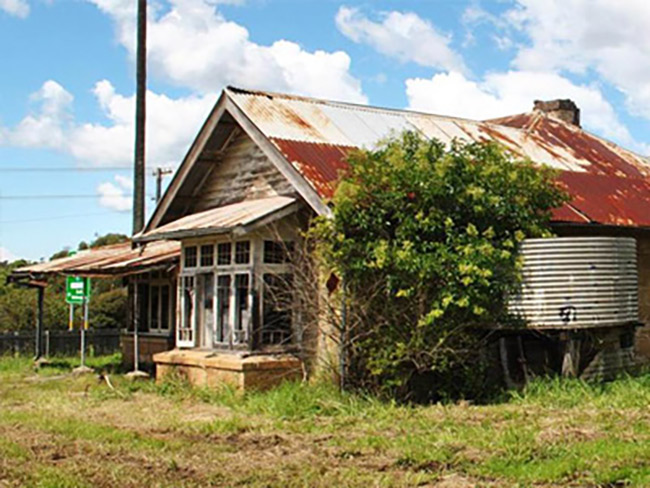
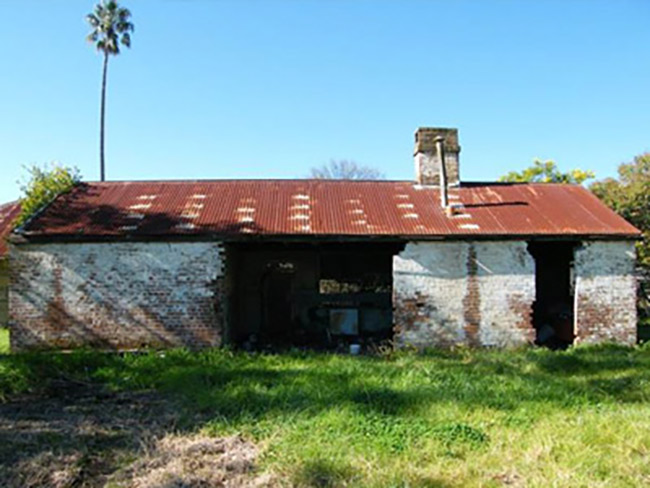
External Eastern Elevation External Eastern Elevation
External West Elevation External West Elevation
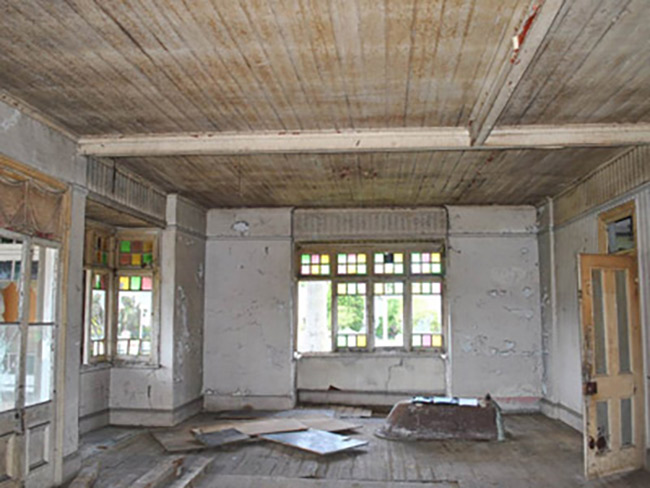
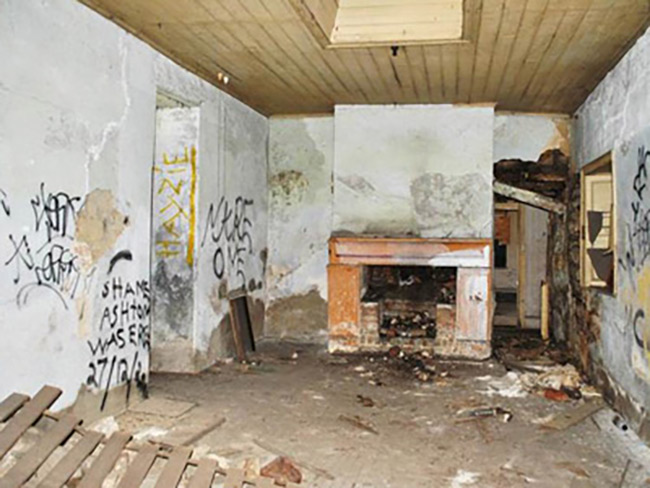
Room 1 Room 1
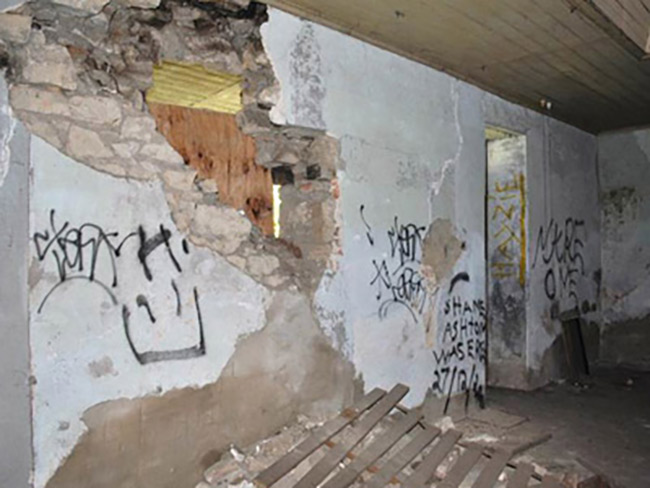
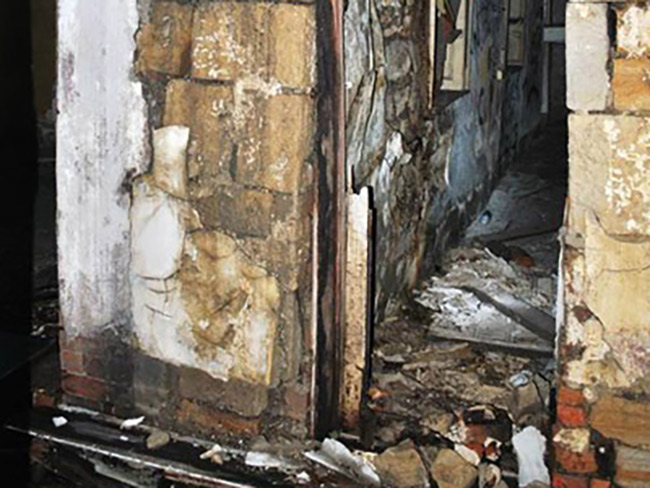
Room 8 block wall Room 8 block wall
Outbuildings Outbuildings
Room 8 Room 8
South Wall internal door into room 8 South Wall internal door into room 8

Send Feedback

We collect your personal information for the purpose of delivering our services. By providing this information, you confirm that you have read and consent to the processing of your personal information in accordance with our Privacy Policy.